on April 22, 2026

By Dr Tina Hansen MRCVS, DVM, CVA, and CPCN.
Probiotics are everywhere - powders, chews, sprays, drops and one thing they all have in common is the promise to “restore gut health,” especially when your dog is on medication. Probiotics are one of the most researched tools in gut health.
But here’s something most labels don’t explain:
Medication, especially antibiotics, can change the gut environment completely.
And during that time, live probiotics may not work the way you expect.
So the real question becomes: Are live probiotics actually helping your dog while on medication - or are they just adding cost without reliable benefit?

What Happens to the Gut During Medication?
Antibiotics like metronidazole don’t just target harmful bacteria - they also affect beneficial microbes in the gut. Studies in dogs show that antibiotics can cause dysbiosis, meaning an imbalance in the gut microbiome.
Why does this matter?
A healthy gut microbiome helps with:
- Digestion and nutrient absorption
- Immune communication
- Maintaining a strong intestinal barrier
When this balance is disrupted, digestion can become less efficient, and the gut lining may be temporarily compromised, meaning it can take longer for the digestive system to return to normal - especially during illness or recovery.
The Problem With Live Probiotics During Medication
Probiotics sound like a simple fix, but in reality, they’re more complicated - especially when medication is involved.
1. Antibiotics don’t discriminate
Even when probiotics are given hours apart from antibiotics, studies show that:
- Gut imbalance still occurs
- Beneficial bacteria are suppressed
- Recovery is inconsistent
In everyday home use (with imperfect timing, storage, and dosing), results can be even less predictable.
2. Survival isn’t guaranteed
For a live probiotic to work, it must:
- Still be alive in the package
- Survive heat, moisture, and time
- Survive stomach acid and bile
-
Avoid being wiped out by medication
That’s a lot of hurdles - and most products aren’t tested to confirm how much actually reaches your dog’s gut alive.
3. Probiotics Don’t Need To Colonise - But That’s Also the Catch
Interestingly, some benefits of probiotics appear even when the bacteria don’t permanently colonise the gut. This suggests that the helpful effects may come from what bacteria produces - not just from the bacteria being alive.
That leads us to a more pointed question.

What Does the Gut Really Need During Medication?
When your dog is on medication like antibiotics or NSAIDs, their gut is under stress. Instead of introducing fragile new bacteria, it often benefits more from receiving:
- Fuel for existing good microbes
- Support for the gut lining
- Stable digestive and immune signals
- Ingredients that work with medication, not against it
This is where non-live gut support becomes especially valuable.
A More Stable Approach: Pre, Para-Pro and Postbiotics
Unlike live probiotics, this triple-action combination does not rely on survival or colonisation.
Prebiotics
Fibers that feed your dog’s existing beneficial bacteria, helping them recover naturally.
Para-Probiotics
Inactivated microbial cells that still support immune and gut function - without being affected by antibiotics.
Postbiotics
Beneficial compounds produced by microbes (like fermentation products and metabolites) that support gut barrier strength and immune balance.
Antibiotics can’t destroy them.
Research suggests that feeding and supporting the existing microbiome can be more predictable than trying to replace it with live bacteria during medication.

Why We Take This Approach
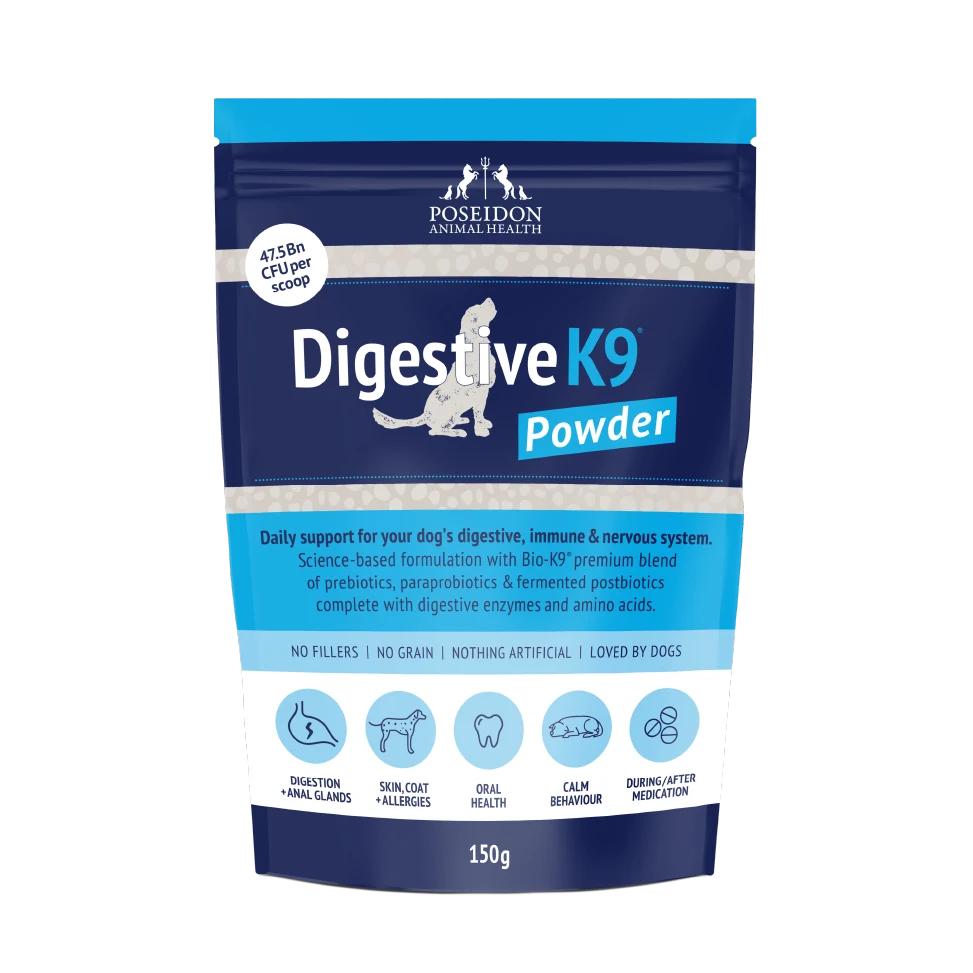
DigestiveK9 was formulated for real-world situations, which aren’t always “best-case scenario” times - when dogs are stressed, medicated, or recovering.
Instead of relying on live bacteria, it focuses on:
- Feeding and stabilising the gut environment
- Supporting the intestinal lining
- Providing consistent, medication-compatible gut support
Key ingredients include:
- Bio-K9® fermented species-specific Pre, Para-Pro and Postbiotic blend
- L-Glutamine to support gut lining health
- Digestive enzymes and ginger for digestive comfort
- Spirulina and beef liver for nutrient-density

The Takeaway
Probiotics can play a role in gut health - but during medication, their survival and efficacy are unpredictable.
If your dog is on medication, gut support should be:
- Stable
- Predictable
- Compatible with treatment
Supporting your dog’s own microbiome - instead of gambling on fragile live bacteria - is often the smarter, more consistent choice.
That’s the philosophy behind DigestiveK9, and why during medication, non-live gut
support may give you more value for your money than live probiotics ever could.
Other studies to check out:
Postbiotics may help mitigate antibiotic-induced microbiome injury in humans - though this is one of the very few controlled clinical postbiotic trials involving antibiotic exposure: https://pubmed.ncbi.nlm.nih.gov/41312988/
Educational Disclaimer:
This article is for educational purposes only and is not intended to diagnose, treat, cure, or prevent any disease. DigestiveK9 is a nutritional supplement, not a medication. Always consult your veterinarian regarding medical treatment for your dog.